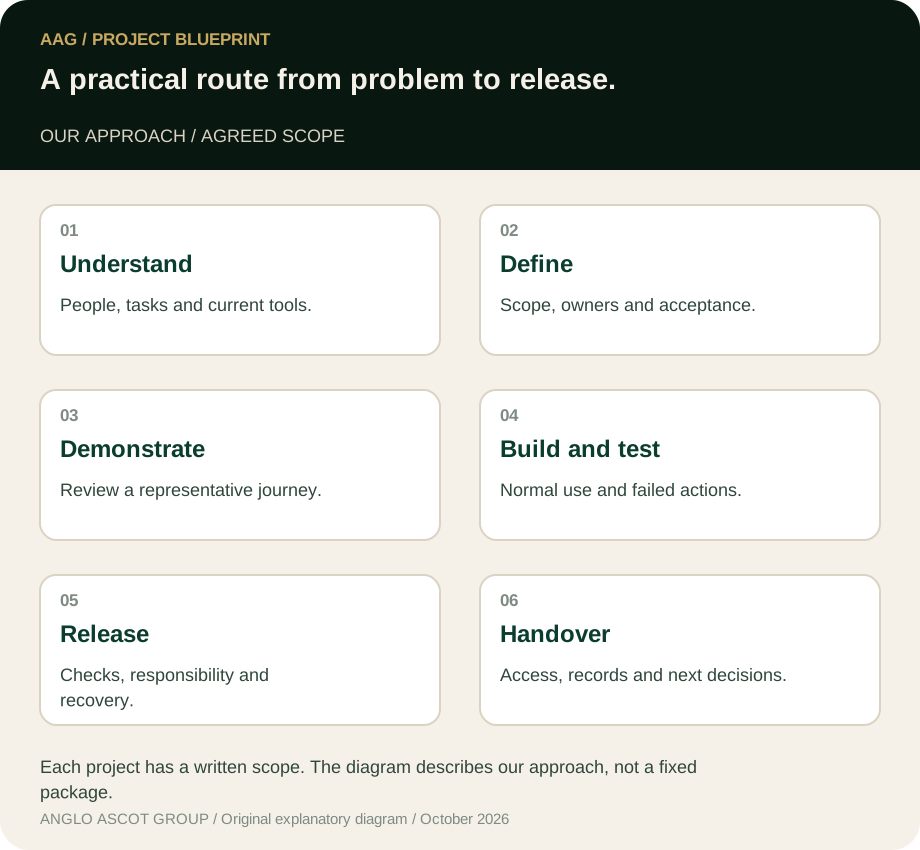
A website or business system should make something specific easier. Our approach starts with that job, then turns it into a defined scope, a reviewable design and a manageable release. You should understand what is being built, what is included and what happens after launch.
You do not need a technical specification to start. Describe the part of the day that is frustrating: customers cannot find the right information, staff repeat the same update, records are difficult to locate or a handoff depends on one person’s memory. We look at who is involved, what they need to do and what information they rely on.
Existing tools matter. A useful change might be a clearer website, a better form or an improvement to the system already in place. A completely new application is appropriate only when it serves the actual requirement. We also identify constraints early, including content availability, access to existing accounts, sensitive data, external providers and the person able to approve the work.
The result of this first stage is a shared problem statement and a sensible first scope. It gives later decisions something concrete to be checked against.
FROM CONVERSATION TO EVERYDAY USE
What each stage should produce.
The proposal records the deliverables, responsibilities, review points, price and relevant dependencies for your project. These are the practical questions we work through.
01
Define the first useful release.
Agree the people using the result, the main journey, the pages or functions included and what is deliberately outside the first phase. Separate a must-have operating requirement from an idea that can wait.
Output: a written scope and an understandable acceptance checklist.
02
Review a representative journey.
Make the important sequence visible before expanding the build. For a website, that could be finding a service and sending an enquiry. For a system, it could be adding a record, changing its status and finding it again.
Output: a reviewable structure or prototype, with content and decisions attached.
03
Build around the agreed work.
Develop the included pages and functions in reviewable stages. Check the real content, permissions and connections needed for the task. Record a change in scope before treating it as part of the original delivery.
Output: a working version that can be checked against the agreed scope.
04
Test success and recovery.
Check the ordinary journey and the things that can go wrong: missing information, a rejected submission, an incorrect permission, an interrupted connection or an update that needs reversing.
Output: evidence of the relevant checks and a clear list of any unresolved decisions.
05
Release with a recovery route.
Confirm the destination, domain or accounts, public content, enquiry handling and any external connection involved. Identify who authorises the release and what happens if an important check fails.
Output: a release decision with the checks, responsibilities and recovery steps recorded.
06
Make ownership understandable.
Record who can edit content, manage accounts, change business records and request support. Agree the hosting, licences, provider costs, documentation and ongoing work actually included.
Output: a usable handover and an owner for routine operation.
THE PROJECT BLUEPRINT
The whole route, at a glance.
Each stage has a practical output. A design preview establishes a direction; a working build establishes behaviour; a release check establishes that the agreed behaviour works in its intended environment. Those are related milestones, but one does not automatically prove the next.
A polished happy path can hide the decisions that matter in everyday use. An enquiry form should explain a failed submission as well as a successful one. A record system should make permission boundaries clear. A content editor should help an authorised person update the right material without accidentally changing unrelated pages.
We choose checks that match the project. A public website may need mobile reading, navigation, keyboard use, contact handling, links and search foundations checked. A private system may additionally need role access, record changes, document handling and recovery considered. The agreed scope determines the specific work, rather than a vague promise that every possible scenario has been certified.
Where a connection relies on another provider, it needs to be examined as part of the whole journey. A button that opens correctly does not prove that an order, payment or email was received at the other end.
OWNERSHIP & BOUNDARIES
Clear responsibilities prevent a difficult handover.
The business remains the authority on its services, prices, availability and customer promises. We agree who provides copy, images, approvals and any relevant source material. Logos, photographs, testimonials and client examples need appropriate publication rights; confidential records should not be used casually in a public preview.
For systems involving personal information, the scope should identify the purpose of the data, who can access it, how long it is needed and which providers are involved. Legal and commercial documents must reflect the actual arrangement. A generic website policy does not automatically establish a processor agreement or a paid support commitment.
Changes are recorded with their effect on cost and timing before proceeding. That keeps new ideas visible while protecting the clarity of the first agreed release. A later phase can be the right home for a useful feature that is not necessary today.
FREE PROJECT CHECKLIST
Bring a useful brief, not a perfect brief.
The short checklist helps you describe the problem, intended users, existing tools and a sensible first result. It also covers content ownership, access, acceptance and handover. You can fill it in yourself or use it as the basis of a conversation. Leave out passwords, personal customer records and information that is not needed for the initial discussion.
No. Start with the task and any constraints. Existing platforms and provider requirements can be assessed before deciding whether to improve, connect or replace something.
Can you work with an existing website or system?
Subject to access and the platform, yes. We review the available source, accounts and restrictions before committing to a change or recommending a rebuild.
How are price and timescale decided?
They depend on the defined scope, content readiness, integrations and review stages. The proposal records the price, responsibilities and delivery assumptions before work begins.
Is ongoing support automatically included?
No. Hosting, maintenance, monitoring, updates and response arrangements are included only where specified. The handover identifies who owns work outside an agreed support arrangement.
START WITH THE REAL TASK
Tell us what needs to work better.
A short account of the problem, the people involved and the result you need is enough to begin.