Restaurant, takeaway and hospitality websites need to answer practical questions quickly: what is available, when it is served, where to go and how to take the next step. AAG scopes clear public websites and, where required, the booking, ordering and working tools behind them.
A restaurant with table service, a collection takeaway and a venue handling walk-ins have different operating needs. The website should reflect those differences. A booking request is not automatically a confirmed table. An online menu is not automatically a functioning ordering service. A delivery option needs an agreed fulfilment process.
We begin with the customer journey and the staff handoff. What can a visitor do now? Who receives the action? What information must be current? What happens if the venue is at capacity or an item is unavailable? Those answers help define a useful first release without committing the business to features it cannot reliably support.
For some venues, the right first step is a well-managed website with clear menus, hours, location and enquiry routes. For others, an operational connection can be scoped around a specific repeat problem. The public pages and the internal tools should be planned together while keeping their responsibilities distinct.
WHAT WE CAN SCOPE
A scope built around the work.
The proposal identifies which of these elements are included. They are not an automatic package.
01
Restaurant and takeaway websites
Build a clear structure for the menu, service options, practical visit information and contact. Organise information so that someone on a phone can understand the offer and act. Content editing should have an owner, especially where menus, opening times or availability change. The scope identifies who supplies photography and food information and who approves it.
02
Bookings, queues and ordering
Assess whether the business needs a booking enquiry, confirmed reservation, walk-in queue or direct-ordering flow. These are different functions with different capacity rules. We define provider choices, acceptance states, cancellations and the staff view before describing any feature as included. Payments, delivery integrations and third-party fees are separately agreed.
03
Working information for the team
Where required, scope the view that helps staff understand what needs action. That might involve accepted requests, booking information or menu availability. The goal is a relevant working record, not a collection of decorative dashboard numbers. Access, updates, exception handling and the manual fallback need to be clear.
EXPLAINED VISUALLY
The working model, explained.
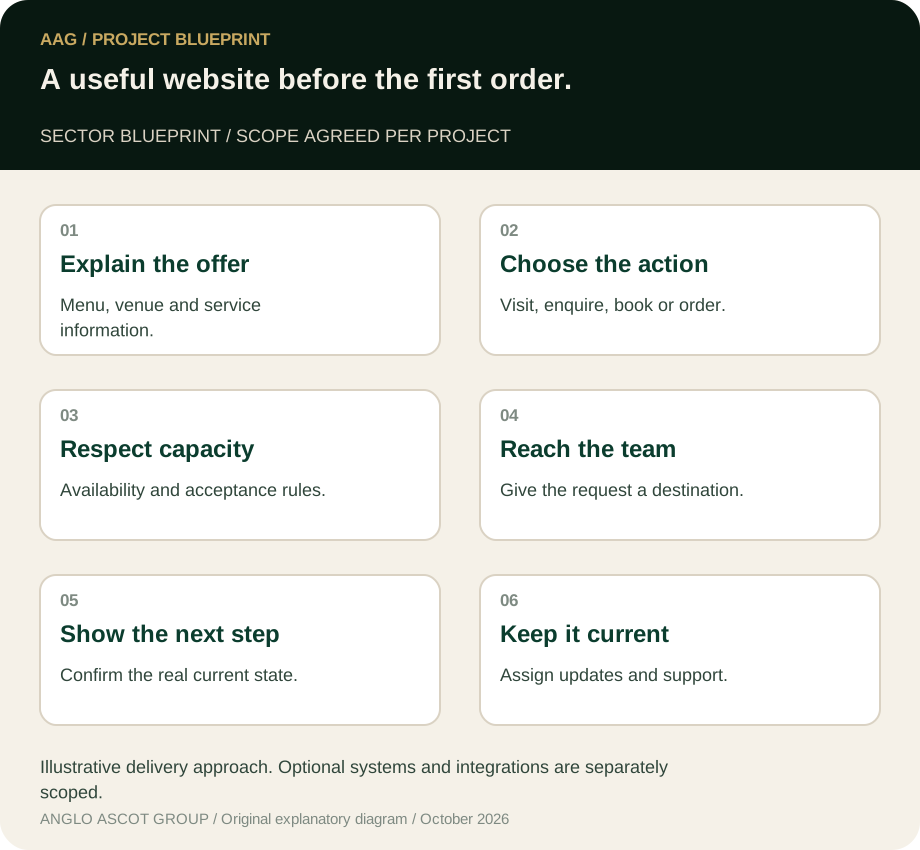
This original blueprint shows the questions behind a useful service journey. It is an explanation of the approach, not an outcome chart or a claim that every optional feature is already deployed.
A practical brief uses one representative service period. Walk through the ordinary customer request, then an unavailable item, a cancellation and a failed connection. These examples show whether the public promise matches the working process. A prototype can use fictional records so the design can be discussed without exposing customer information.
The proposal then identifies the pages, functions, providers, content responsibilities and acceptance checks. A public site can launch independently of a later operational phase when the scope supports that separation. Ongoing menu changes, provider subscriptions, hosting and support are recorded rather than assumed.
Can you build a restaurant website without replacing our ordering provider?
Subject to the existing provider and access, a website can connect visitors to the service already used. We assess the actual integration or link rather than assuming every provider permits the same behaviour.
Is online payment included?
Only where explicitly scoped. Payment provider setup, fees, refund responsibilities and the link between payment and order acceptance need to be agreed.
Can staff update menus themselves?
Content editing can be included. The proposal identifies what can be changed, who has access and what training or documentation is provided.
Can you guarantee more orders?
No ranking, sales or order-growth guarantee is made. The agreed work can be checked against usable journeys and defined technical behaviour; commercial results need separate measurement.