Professional service firms need a website that makes the offer understandable and a working process that keeps enquiries moving. AAG scopes service websites, enquiry tracking, internal tools and client portals around the people, records and decisions involved in delivering the service.
Trust needs practical information as well as presentation.
A prospective client often arrives with a problem rather than the exact name of a service. The website needs to explain who the service is for, what happens next and what information is useful at the first conversation. A polished page can create confidence, but unclear boundaries or an unfocused contact form can still leave the visitor uncertain.
The internal side matters too. An enquiry may need an owner, a next action and a record of what has been discussed. If those details are scattered across inboxes and private notes, a new website alone will not resolve the follow-up problem.
We start with the actual service journey and the tools already in use. An improvement may involve clearer public pages and a better enquiry route. A more involved scope may connect enquiry tracking, documents and a private client view. Regulated advice, professional qualifications and compliance claims remain matters for the qualified business to approve.
WHAT WE CAN SCOPE
A scope built around the work.
The proposal identifies which of these elements are included. They are not an automatic package.
01
Service pages and enquiry journeys
Explain the offer in the client’s language, with distinct pages where services address genuinely different needs. Clarify the first step and collect only the information needed to begin. Credentials, memberships, testimonials and outcome claims must be supported before publication. The website should accurately present the firm’s role and limits.
02
Enquiry tracking and internal tools
Map the steps between a new enquiry and the next decision. A useful record might identify ownership, current status, a due action and relevant notes. We assess existing CRM options before proposing a bespoke system. The scope should define permitted access, corrections, exports and the treatment of inactive records.
03
Client portals and document journeys
A private area can support agreed document and update tasks when there is a clear reason for an account. Define which person can see each item, how uploads are handled and what the displayed status means. A portal is not a substitute for professional judgement, a signed engagement or the firm’s own client procedures.
EXPLAINED VISUALLY
The working model, explained.
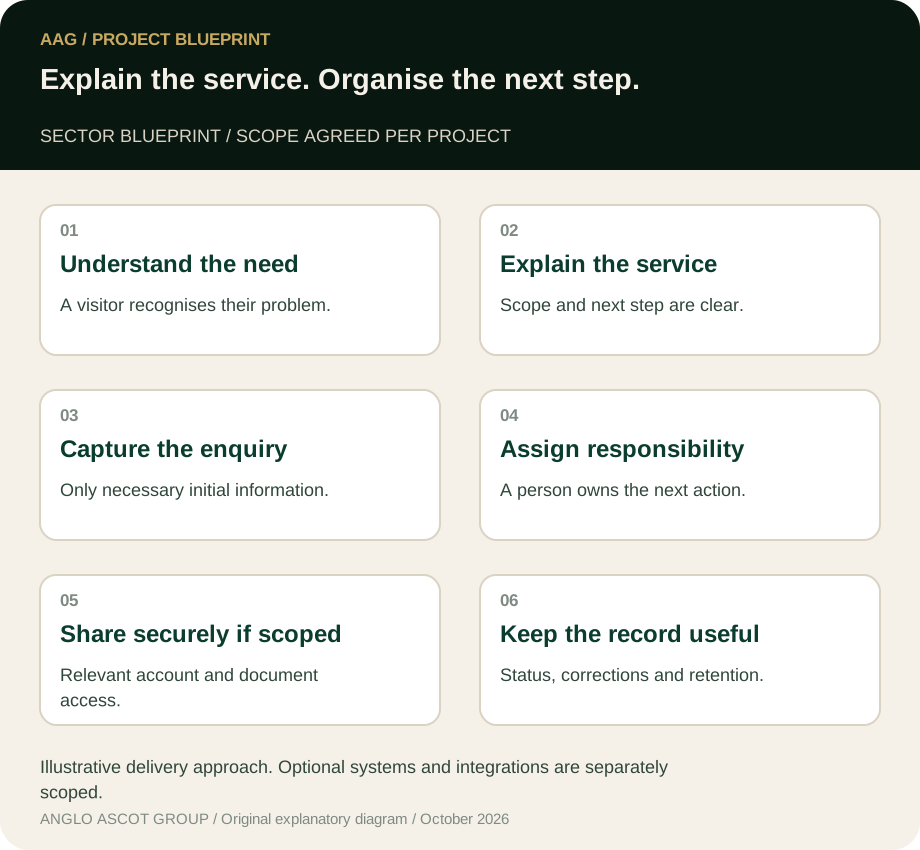
This original blueprint shows the questions behind a useful service journey. It is an explanation of the approach, not an outcome chart or a claim that every optional feature is already deployed.
A representative journey provides a useful brief: someone enquires, the team reviews the request, a next action is assigned and the person receives an appropriate response. If documents are involved, use a fictional example to establish who supplies, reviews and accesses them.
The proposal identifies public content, internal functions, account roles, provider dependencies and the checks relevant to the project. A public website and a private operational system can be phased separately. That keeps the first release focused and avoids presenting unbuilt functionality as part of the offer.
Not necessarily. An existing tool or a clearer process may be sufficient. We assess the task, access and current systems before recommending a custom build.
Can you publish our professional accreditations?
Only when the firm supplies accurate, current evidence and appropriate permission for any mark. A website project does not itself confer professional accreditation.
Can an AI feature make decisions for our clients?
Any AI scope needs a defined task, review responsibility and evaluation criteria. Professional judgement, sensitive data and client-facing promises require particular care and cannot be assumed from a demonstration.
Can a portal replace email completely?
That depends on the agreed workflow and the people using it. A portal can support defined tasks, but alternative contact and recovery routes may still be needed.