Property businesses serve people with different questions. AAG builds public website structures around landlord services, tenant information, property listings and relevant enquiry routes. Where a business needs individual records or documents, a private portal is scoped as a separate operational layer.
A public website and a private portal do different jobs.
A landlord comparing a management service needs a different starting point from an existing tenant reporting a problem. A prospective tenant may be looking for available property information. Combining those tasks into a single generic contact page can make every visitor explain their relationship from the beginning.
A clear public website helps people recognise the relevant route. It explains the business’s services and provides practical information without exposing individual property or tenancy records. A private portal changes the problem: it needs appropriate account access, record ownership, document handling and a clear process for keeping information current.
We separate those layers in the scope. A brochure website should not be advertised as a working maintenance platform simply because it contains a contact form. Equally, a portal should be designed around a useful ongoing task, rather than added because a login screen appears more advanced.
WHAT WE CAN SCOPE
A scope built around the work.
The proposal identifies which of these elements are included. They are not an automatic package.
01
Property and agency websites
Organise the management offer, local context, landlord and tenant information, property listings and contact routes. The business remains responsible for accurate availability and approved descriptions. The content structure should help visitors identify the appropriate next step without navigating internal office terminology.
02
Enquiries and maintenance routes
Define what information is needed for the first enquiry and where it goes. A general contact request, a maintenance report and an urgent incident may require different instructions. The website should reflect the operator’s actual response process. Private case tracking, staff assignment and status updates are separately scoped capabilities.
03
Landlord or tenant portals
Where an individual account area is useful, define who can see each property, document or request. Decide how access begins and ends, how records are corrected and what is visible to different roles. A portal may support documents and updates, but its scope must follow the business’s real data responsibilities.
EXPLAINED VISUALLY
The working model, explained.
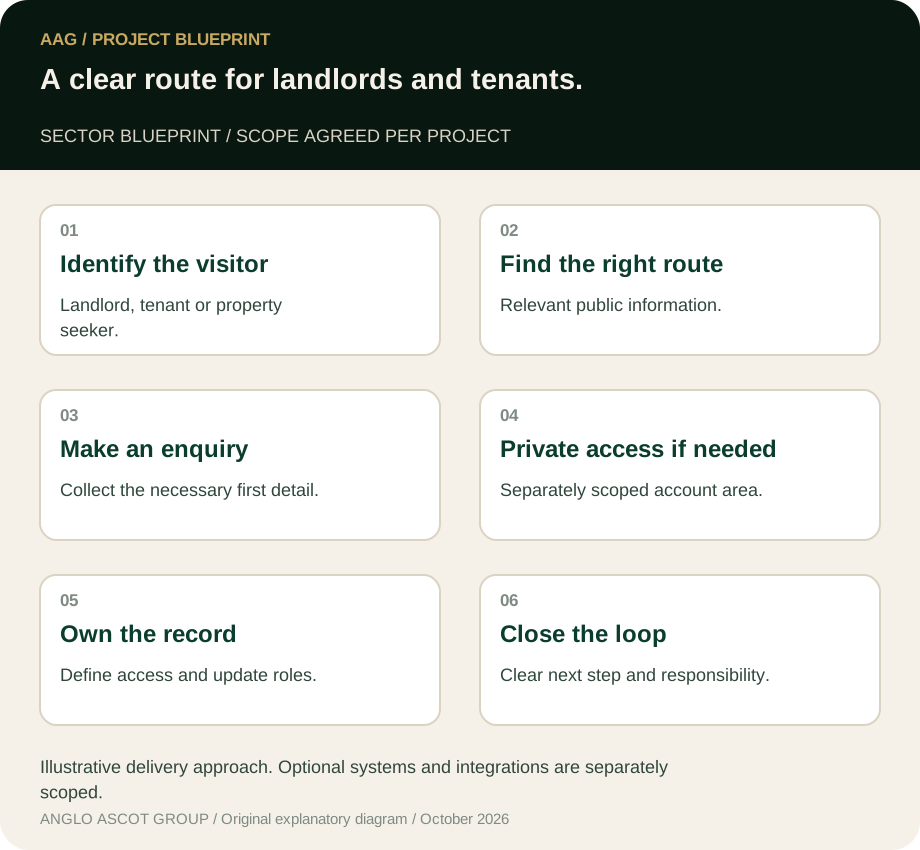
This original blueprint shows the questions behind a useful service journey. It is an explanation of the approach, not an outcome chart or a claim that every optional feature is already deployed.
We begin with a small number of real tasks described without personal customer data. A landlord enquires about management. A prospective tenant reads a listing. An existing tenant needs the appropriate maintenance route. If a portal is needed, add an account access and document example using fictional records.
These journeys reveal the useful pages, permissions and handoffs. The written scope records what is public, what is private, what can be edited and who owns routine updates. Any external property feed, payment function or existing software connection is assessed separately.
The live Atlas Midlands project demonstrates a brochure and enquiry scope. The Nice Rent is a completed client website in pre-launch. Neither example is presented as a delivered private CRM or as evidence of increased lettings.
COMMON QUESTIONS
Questions before the build.
Do you build property portals or only brochure websites?
Both can be discussed, but they are separately scoped. A portal requires account permissions, individual records and ongoing operating responsibilities beyond a public website.
Can you connect an existing property feed?
That depends on the provider, available access and permitted integration. We review those conditions before including a feed or synchronisation promise.
Can the website handle emergency maintenance?
Only if the business has a defined process that the website accurately supports. A general form must not imply continuous emergency monitoring.
Can you show examples without disclosing tenant information?
Yes. Public project facts, original diagrams and fictional test records can explain the design without publishing private tenancy or property documents.