Services and prices
Public service information gives visitors a starting point for choosing what they need. Clear naming matters because a first-time customer may not use the same terminology as the team.
 Consultancy · Systems · InfrastructureGet in touch
LIVE CLIENT WEBSITE
A public website for Turkish Barbers in Castle Bromwich, built around the questions someone asks before a visit: which service, what price, when to come and where to go. The current website brings services, prices, a gallery, opening hours and contact information together. Online queue and booking features remain a separate development direction.

THE PROBLEM & THE PURPOSE
A barbershop website has a very practical job. Someone looking on a phone may be comparing a haircut, checking whether the shop is open or trying to find the entrance. A striking first impression is useful, but it cannot replace a readable price list, an accurate location or a clear contact route.
The project is organised around those customer questions. Service information explains the offer; prices help someone decide whether it suits them; opening hours and location support the actual visit. The gallery adds context about the shop and the work it presents. The website connects those pieces into one place instead of expecting a visitor to collect them from several social posts.
This is the problem the information structure addresses. We have not published a before-and-after conversion study or a measured reduction in telephone enquiries.
PROJECT SCOPE
A practical view of the scope at the stated stage.
Public service information gives visitors a starting point for choosing what they need. Clear naming matters because a first-time customer may not use the same terminology as the team.
Opening hours, location and contact details sit alongside the service offer. These are operational facts that the business needs to keep current when availability changes.
The gallery helps visitors understand the shop and its work. It supports the service information without making a photograph carry essential prices, instructions or contact details.
EXPLAINED VISUALLY
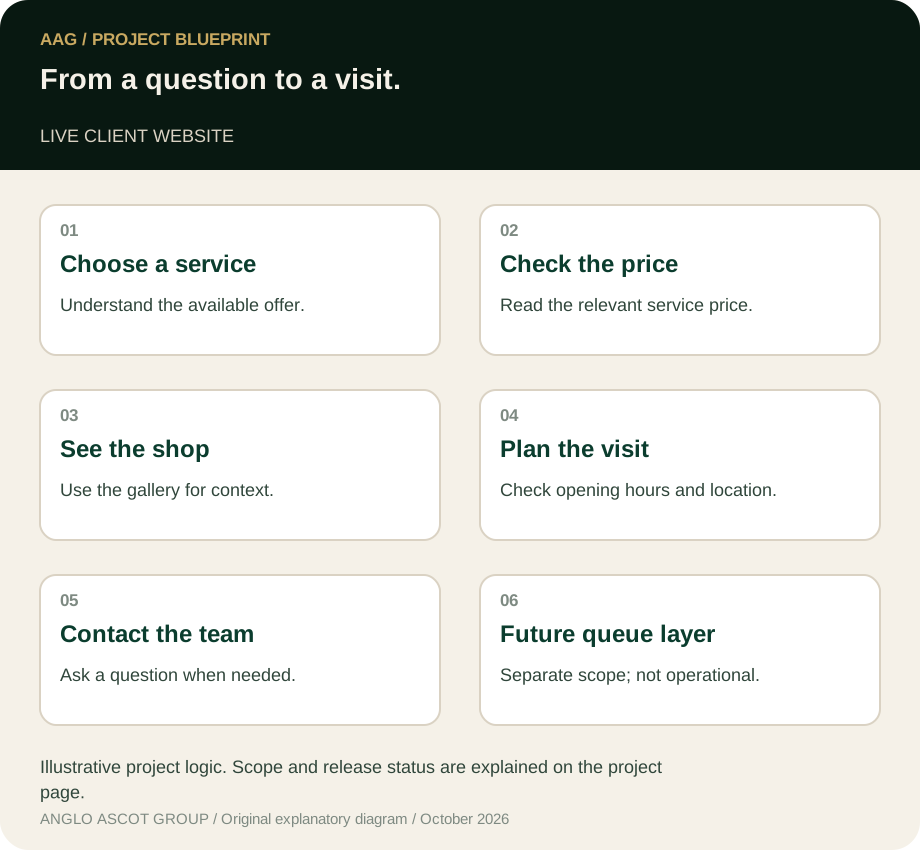
The information journey describes the public website. The final card identifies a possible operational extension, not a working booking or queue service. The sequence is a simple explanation of the visitor task, not a measured customer funnel.
 Open the blueprint
DESIGN DECISIONS
The useful design decision is to separate finding information from reserving capacity. A public service page can describe a haircut. A booking system has to know whether a person can actually be served at a particular time. A queue adds a different promise: the customer joins an order of service, with rules for absence, breaks and changing demand.
Those are different responsibilities. The live site therefore needs to be judged on the information it delivers now. The customer-flow design note considers the later queue and booking questions without describing them as launched.
For a local business, mobile clarity is especially important. Visitors should be able to read the main facts, follow a contact link and return to the service information without navigating an elaborate presentation.
EVIDENCE & LIMITS
The public Turkish Barbers website is the external reference for the delivered public pages. This case study describes that scope and shows an original AAG explanation of the journey. It does not publish private staff screens, customer information, commercial terms or claimed increases in bookings.
Queue and booking features shown as coming soon on the client site are not operational. Their presence in a concept or design note is not evidence of a live deployment.
OUR TAKE
A small local website becomes more useful when the ordinary questions are treated as the main product. The next operational feature should be chosen because the business can support it consistently. Explore our websites for walk-in and appointment businesses or the wider website design service.
DETAILS
The scope described here is the public information website. Online queue and booking functions are marked coming soon and are not currently operational.
No numerical commercial outcome is claimed. The evidence is the public website and the clearly stated delivered scope.
Yes. The service, price, visit and contact questions are transferable, while any appointment or queue rules need to be defined for the particular business.
LET’S TALK
Tell us about the people using the result, the task that is difficult today and what a useful first release should do.