Customer entry
A QR code or link provides the entry point. A useful check-in must confirm whether the person has joined and avoid ambiguous repeated submissions.
 Consultancy · Systems · InfrastructureGet in touch
AAG PRODUCT / EARLY BETA
Veya Cue is an Anglo Ascot Group project exploring a clearer way to manage walk-in demand. Customers join through a QR code or link; staff work from a shared queue view; the customer can understand the next step. The product remains in early beta. This case study explains the operating problem and product direction without claiming a completed commercial rollout.
THE PROBLEM & THE PURPOSE
A walk-in queue is more than a numbered list. Customers need to know whether they have joined successfully and what to do next. Staff need to see who is waiting, who is being served and where an exception needs attention. If those views disagree, the team has to explain the same situation repeatedly.
Veya Cue explores a shared queue record across those two perspectives. The customer-facing entry is deliberately lightweight: a link or QR code rather than a dedicated app download. The staff view handles the working queue, while the customer status view communicates the relevant next step.
The goal is clearer service coordination. It is not a promise that software can remove waiting or calculate a perfectly accurate appointment time for a variable walk-in service.
PROJECT SCOPE
A practical view of the scope at the stated stage.
A QR code or link provides the entry point. A useful check-in must confirm whether the person has joined and avoid ambiguous repeated submissions.
The staff dashboard is the working view of the queue. Staff need a practical way to handle order, availability and exceptions without losing the meaning of the record.
A separate view communicates queue information. The public description does not promise a guaranteed service time or a particular notification channel.
EXPLAINED VISUALLY
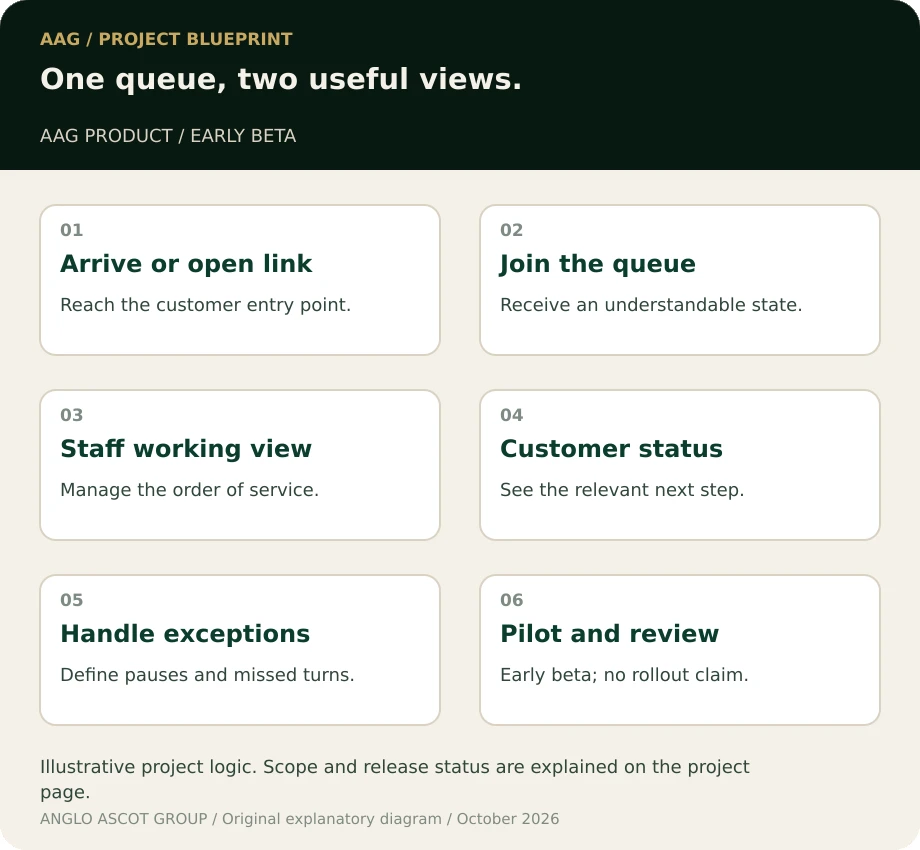
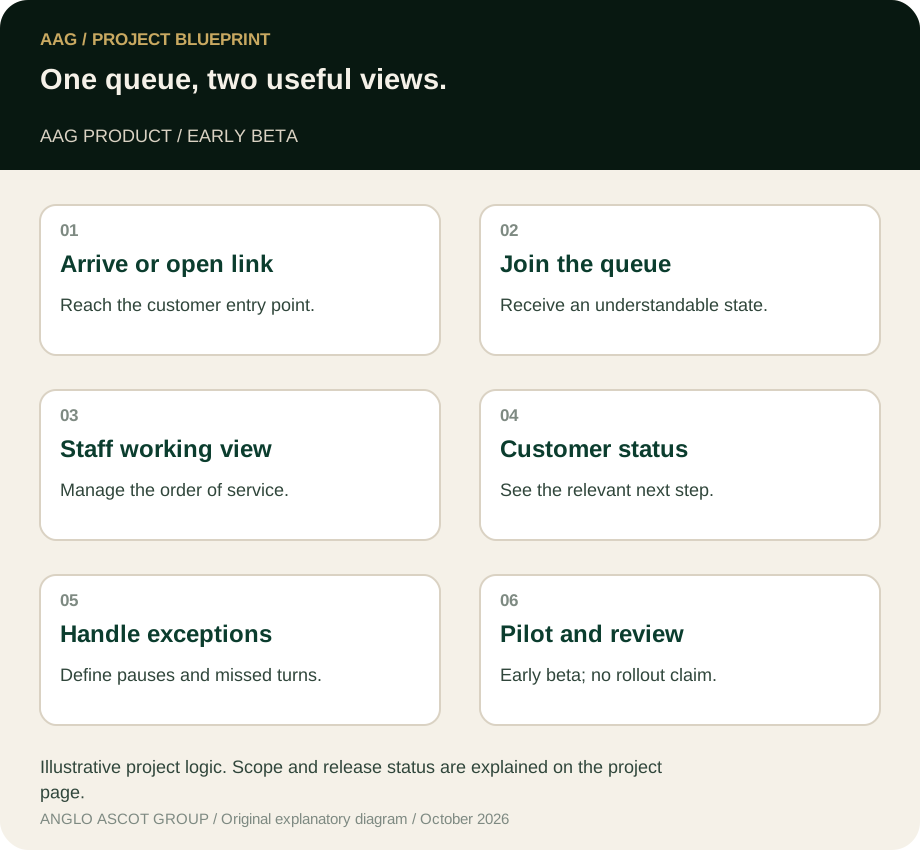
The blueprint is a high-level explanation of the beta direction. It omits private implementation, business rules and customer data. Exception handling is an operating requirement to define and test, not a claim of every possible completed feature.
 Open the blueprint
DESIGN DECISIONS
Joining, being physically present and being ready for service are different states. A reliable queue experience needs a clear rule for each transition. It also needs a decision about late arrivals, breaks, people requiring assistance and situations where a staff member has to change the order.
These are product decisions with a direct effect on customer expectations. An estimated wait should be described as an estimate. A queue should not quietly become a booking service simply because the interface displays a time.
For a beta, the useful questions are observable: can someone join once, understand their state and recover from a mistake? Can a staff member explain the next step using the same information the customer sees? Those questions provide a more honest trial plan than an unsupported claim of shorter waiting times.
EVIDENCE & LIMITS
Veya Cue is owned by AAG, as confirmed by the project owner. It remains in early beta. The portfolio describes its entry, staff and customer-view direction without publishing private screens, customer records or venue-specific agreements.
No adoption total, measured time saving, accuracy rate or client rollout is claimed. The Veya Cue website is the separate product destination; its current product information and notices apply there.
OUR TAKE
The useful lesson is that a queue interface should help people agree on the current situation. A more attractive waiting screen alone cannot settle inconsistent operating rules. Read the queue design note or explore walk-in and appointment websites.
DETAILS
Yes. Veya Cue is an Anglo Ascot Group project.
The stage presented here is early beta. Any pilot, hosting, support or commercial arrangement needs its own agreed scope.
Joining a walk-in queue and reserving an appointment are different actions. The operating rules must make that distinction clear.
LET’S TALK
Tell us about the people using the result, the task that is difficult today and what a useful first release should do.